Short answer
Movers charge extra when a job takes more labor than the estimate assumed: stairs, a long walk from the truck to your door, elevator waits, very heavy items, a shuttle truck, packing materials and furniture assembly. Each can be priced in advance if you describe both addresses honestly and get every add-on written into the estimate before signing.
Most moving company extra charges for stairs, long carries, elevators and heavy items come from one gap: the estimate assumed an easy job and move day turned out harder. Movers call these add-ons accessorial charges. The common ones are a fee per flight of stairs, a long carry fee when the truck parks far from your door, elevator or waiting time, a surcharge for very heavy or awkward pieces, and a shuttle truck when a full-size truck cannot reach the building.
None of them should be a surprise. Every one can be identified on the phone or during a walk-through and written into the estimate before you sign, which is what the rest of this guide walks through.
Why extra charges show up after the estimate
A moving estimate is a set of assumptions: how much you own, how far the truck parks from your door, how many steps sit between your furniture and the street, and how long the crew waits for anything. When an assumption is wrong, the mover adds time or a line item to cover it.
The fix is boring but it works: give the estimator the real picture. A ground-floor ranch home in Cresthaven and a fifth-floor unit in a building on Ocean Blvd can hold the same furniture and still be very different jobs. Our breakdown of what drives moving costs in Pompano Beach covers the base pricing; this post is about the extras layered on top.
Moving company extra charges, one by one
Each mover names and prices these differently, so read the estimate line by line. Here is what each charge usually means and what triggers it.
Stair charges
Charged per flight, per item or folded into extra hours. Exterior stairs on a two-story garden building count, and so do the three or four steps up to a raised entry. Tell the estimator the exact number of flights at both ends, not just at the pickup.
Long carry fees
Applied when the crew has to walk your things a long distance between the truck and the door. Long parking-lot walks at apartment complexes, gated courtyards and townhouse rows with no curb parking are the usual causes. Pace off the distance or measure it on a map and give the mover a number.
Elevator charges and waiting time
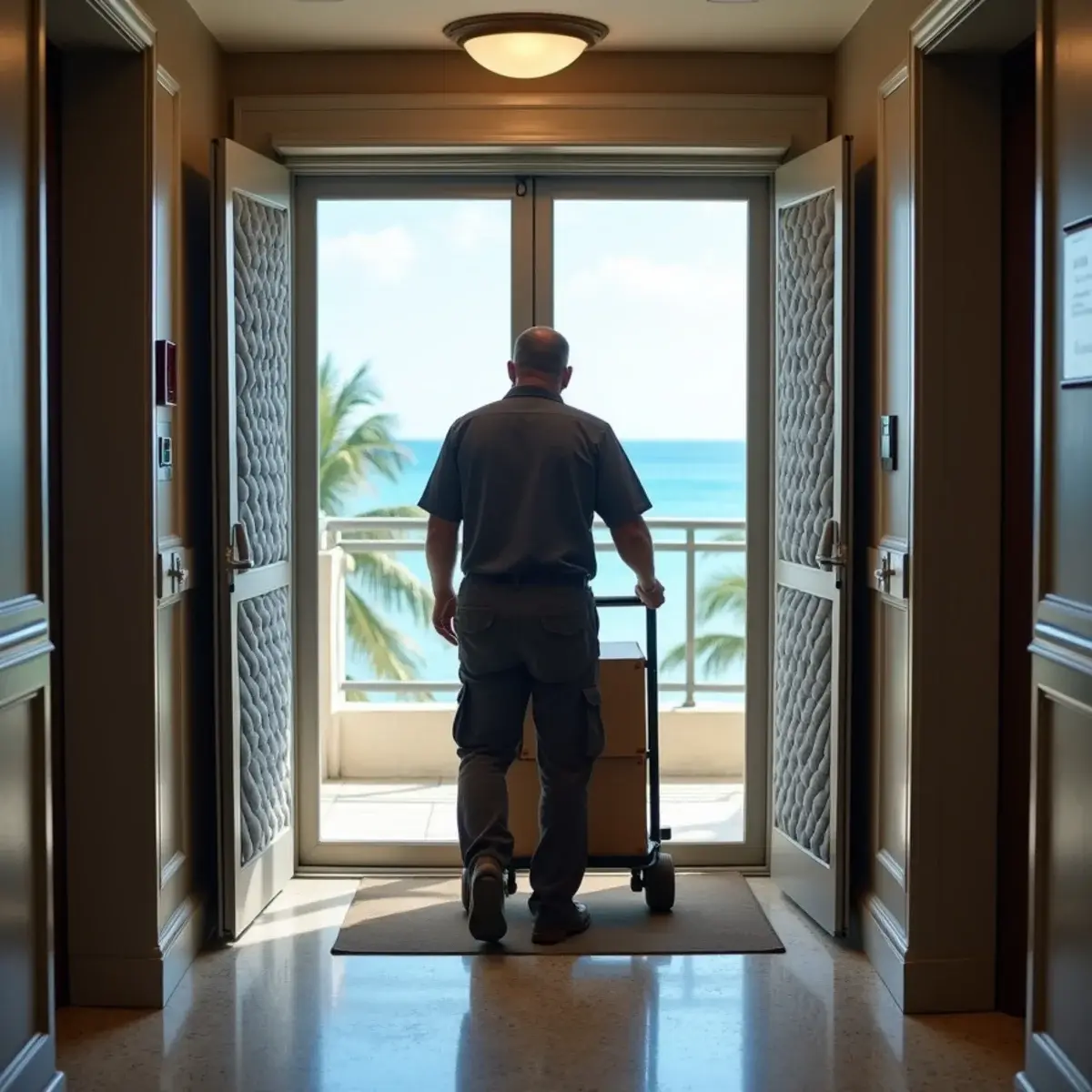
Some movers treat an elevator like a flight of stairs; others bill the time spent waiting for it. A shared passenger elevator at rush hour can eat a surprising amount of the day, which is why booking the service elevator matters so much in condo buildings.
Heavy and bulky item surcharges
Pianos, gun safes, marble or stone tabletops, large aquariums, slate pool tables and oversized armoires often carry a separate fee because they need extra crew, special equipment or disassembly. Our page on moving heavy furniture and specialty pieces explains what crews look for.
Shuttle service
If a large truck cannot reach your address, your belongings are moved to a smaller vehicle and driven in. That is two loads instead of one, and it is priced accordingly.
Packing, materials and assembly
Boxes, tape, mattress bags and stretch wrap are commonly billed as used. Taking apart a bed frame, a sectional or a dining table and putting it back together can be included or billed separately, so ask.
| Charge | Typical trigger | Tell the estimator |
|---|---|---|
| Stairs | Walk-up units, raised entries | Flights at pickup and delivery |
| Long carry | Far parking, gated courtyards | Distance from truck to door |
| Elevator / waiting | Shared or reserved elevators | Elevator type and booked window |
| Heavy item | Pianos, safes, stone tops | Item, size and approximate weight |
| Shuttle | Truck cannot reach the address | Street width, gates, low branches |
| Materials / assembly | Packing, beds, sectionals | What you will pack and take apart |
Local buildings that tend to trigger extras
Around coastal Broward, the same few building types cause most of the add-ons.
- Beachfront high-rises along A1A: service elevator windows, loading areas set back from the entrance and long hallways. The condo move-in rules for Pompano Beach high-rises post explains the paperwork side.
- Two- and three-story garden apartments: common across Oakland Park and its older apartment blocks, with exterior stairs and parking spread around a central lot.
- Canal-front streets east of Federal Hwy: narrow lanes, tight turnarounds and low tree canopy can rule out a large truck.
- Townhouse rows: shared driveways and no curb space often add a long carry.
If you live in one of these, plan on the estimator asking more questions. That is a good sign. For condos and apartments, our apartment and condo movers page lists what crews need to know about the building.
How to get every extra written into the estimate
- Ask for an in-home or video walk-through instead of a quote built from a room count.
- Describe both addresses: floor, stairs, elevator type, parking distance and any gate or guard desk.
- List heavy and fragile items by name, including anything on a balcony, in the garage or in storage.
- Say what you will pack yourself and what you want the crew to pack and take apart.
- Ask directly: what on this estimate could change on move day, and how would it be billed?
- Read the written estimate and contract before signing and check that each extra appears as a line item or a stated assumption.
When move day does not match the estimate
Sometimes the job really is bigger than described: an extra storage unit, a sofa that has to come off its legs, a building that switched elevators. If the crew lead says the estimate no longer fits, ask them to stop, explain the change and write it down before the work continues.
Keep your copy of the estimate on your phone so you can compare line by line. A good crew would rather settle a change in the driveway than argue about it at the end of the day.
From the coordinator's desk
Where the extras actually come from on the calls we take
Most add-on disputes we hear about start at the delivery address, not the pickup. People describe the home they are leaving in detail and the new one in a single line. Then the crew reaches a walk-up, or a loading area around the back, and the hours add up.
The ones we flag most often on the first call:
- Unfinished boxes. On an hourly job the clock runs while the crew waits for the last cartons. If you are behind, say so a few days out; packing help for the last few rooms beats a crew standing by.
- The building's own fees. Move-in fees and elevator deposits go to the association, not the mover, so they never appear on the mover's estimate. Budget for them separately.
- Shuttle or long carry. When a full-size truck cannot get close, ask which the mover recommends and why. Sometimes a smaller truck by the door avoids both.
One honest tradeoff: the estimate that asks the fewest questions is not necessarily hiding anything, but it has not priced what it does not know. The mover asking for photos of your hallway and parking is less likely to rewrite the bill at the curb.
Frequently asked questions
Do all movers charge extra for stairs?
No. Some movers build stairs into the hourly time and charge nothing separate, while others add a per-flight or per-item fee. What matters is that your estimate says which method applies. Give the exact number of flights at both addresses, including exterior stairs and short runs of entry steps, so the estimate reflects the real job. If the estimate is silent on stairs, ask before signing how they will be billed.
What counts as a long carry?
A long carry is any walk between the truck and your door that is longer than the distance the mover includes as standard. Each mover sets its own threshold, so ask what it is. Common causes are apartment parking lots, gated pool courtyards and townhouse rows without curb space. Measuring the distance beforehand and telling the estimator lets them price it up front instead of on move day.
Can a mover add charges that were not on the estimate?
A mover can only bill for work that is supported by the written estimate and contract, or by a change you agreed to. That is why it pays to describe both addresses honestly and to ask what could change. If something new comes up on move day, ask the crew lead to explain it and put it in writing before they continue, then compare it with your estimate.
Do movers charge extra for a second stop, like a storage unit?
Usually, yes. On an hourly move the extra drive and the extra loading or unloading add time to the bill. On a flat-price move the mover may list a stop charge or build it into the total. Name every stop when you ask for the estimate, including a storage unit, a relative's garage or a donation drop-off, and check that each appears on the written estimate.
The bottom line
Extra charges are only painful when they are a surprise. Describe the stairs, the walk, the elevator and the heavy pieces before the estimate is written, and the number you sign is the number you should expect to see.
Call Pompano Go Movers at (831) 293-1195 and walk us through both addresses. We will match you with a registered, insured local crew and make sure the details reach them before they write your estimate.